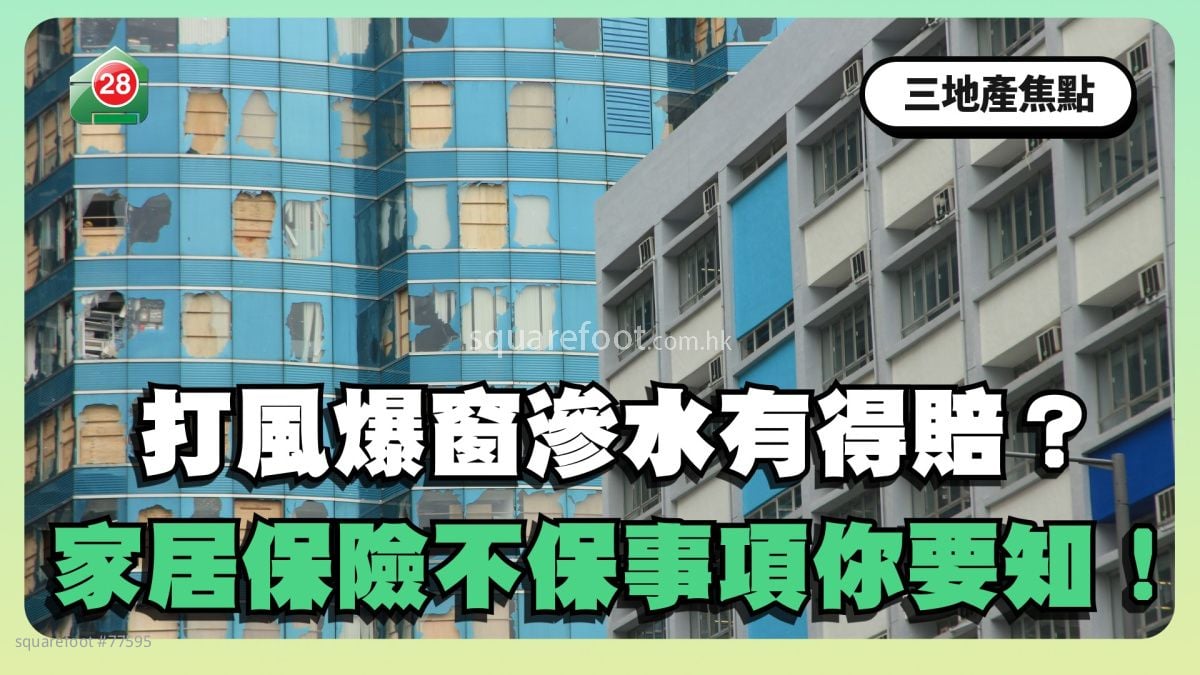
Every year from June to September is the period when Hong Kong is more commonly affected by typhoons. Whenever a typhoon hits Hong Kong, incidents involving shattered windows, loosened window frames, or even windows falling onto the street occur from time to time. Some homes may also experience water leakage, seepage, or even power outages due to heavy rain and strong winds.
Once a home is damaged by a typhoon, repair costs can be considerable. So, does the home insurance people normally purchase actually cover this type of typhoon-related loss? Under what circumstances can a claim be made, and under what circumstances might coverage not apply?
Generally speaking, home insurance mainly covers loss of household belongings caused by sudden accidents, such as fire, burglary, flooding, typhoons, and heavy rain. The Insurance Authority has also stated that situations such as typhoons and flooding are usually among the common insured risks under home insurance. However, the actual scope of coverage, compensation limits, and deductibles still depend on the terms of the individual policy.
Taking broken windows caused by a typhoon as an example, if strong winds damage a window and rainwater subsequently enters the home, causing damage to furniture, electrical appliances, or other household belongings, some home insurance policies may provide compensation. However, damage to window frames, external walls, or the building structure itself may not fall within the coverage of general home contents insurance, because these items usually relate to the building itself and may depend on whether separate building insurance or what is commonly known as “fire insurance” has been purchased.
Another common situation is water leakage or seepage during a typhoon. Some home insurance policies cover loss of household belongings caused by heavy rain, flooding, or rainwater seepage, but there is generally a deductible, meaning the policyholder must bear part of the loss themselves. Deductibles can vary greatly between different insurance plans, so when purchasing insurance, apart from comparing premiums, attention should also be paid to the out-of-pocket amount involved in claims related to flooding and seepage.
However, it should be noted that home insurance usually covers losses caused by “sudden and accidental” events rather than deterioration due to lack of maintenance over time. For example, if the window frame has already seriously deteriorated, pipes leak due to prolonged lack of maintenance, or there was already a water seepage problem before the insurance was taken out, the insurance company may regard this as natural wear and tear, inadequate maintenance, or a pre-existing problem and refuse compensation.
As for windows becoming loose and falling onto the street, if they hit a pedestrian or damage someone else’s property, the situation would involve more than just losses inside your own home and may also involve third-party liability. Many home insurance policies include third-party legal liability coverage. If the policyholder is legally required to compensate a third party due to an accident at home, the relevant coverage may apply.
Therefore, when buyers or owners choose home insurance, they should not only look at the annual premium, but should also carefully compare the scope of coverage, the compensation limit for each item, deductibles, and exclusions. In particular, those living in waterfront areas, low-lying areas, or older properties should pay special attention to whether the coverage for typhoons, flooding, seepage, and windows is sufficient.
Finally, if damage really occurs at home after a typhoon, photos or videos should be taken as soon as possible, and records of the damage, repair receipts, and relevant proof should be kept. The insurance company should also be notified as soon as possible. Before the insurance company has completed its assessment, damaged items should not be disposed of casually. If a third-party claim is involved, you should also not reach a compensation agreement with the other party on your own. The matter should first be handed over to the insurance company for follow-up to avoid affecting any future claim.